
Finding Residents Across Surprise
Start with the clue you already hold. A street address goes into the Maricopa County Assessor search first. A name can be tested against several record sets. Property rolls are one option. Recorded documents, court indexes, business filings, and historical records are others. A case number belongs with the court that keeps the file. Older addresses point toward directory books, census schedules, deeds, and plats from the region's past.
Remember that official rolls record roles, not households. An assessor entry names an owner. The tax mailing address may differ from the parcel itself. A deed lists grantors and grantees, the two sides of a title transfer. A court index only labels parties to a case. None of this proves everyone named actually lived at the address. Renters and relatives often never enter a property record at all. Treat a match as the same person only after two independent sources agree.
- Search the county property roll by the known name, address, APN, subdivision, city, or ZIP.
- Use the Arizona voter portal only to verify the details of a voter whose identifying facts are already known.
- Follow an owner into the Recorder’s grantor and grantee index, narrowing common names by date and document type.
- Check the Arizona Memory Project for past households in regional name and street directories.
- Send a narrow public-record request to the city department when permits, local cases, or administrative records are not indexed online.
Surprise Parcel Directory Starts Here
For a current address, the Maricopa County Assessor property search is the place to begin. One search box takes an APN, a full owner name, a formatted address, subdivision, MCR, city, ZIP, section-township-range, a business account, or a mobile-home VIN. The APN is simply the assessor's parcel number. A situs address marks the land itself. The mailing address is where the owner receives tax notices.
A single parcel result can carry the owner's name, situs address, a separate mailing destination, legal description, subdivision, assessed values, property features, tax links, and deed or sale references. Trusts and companies own plenty of property in Surprise. So resist forcing a business name into a personal identity. Instead, trace a trust or LLC through the Recorder's Business Name field. Use the Arizona Corporation Commission entity search when the structure matters.
The official search screen itself shows how broad the accepted input is. Open the Assessor search to see the controls and the fields each query type unlocks.
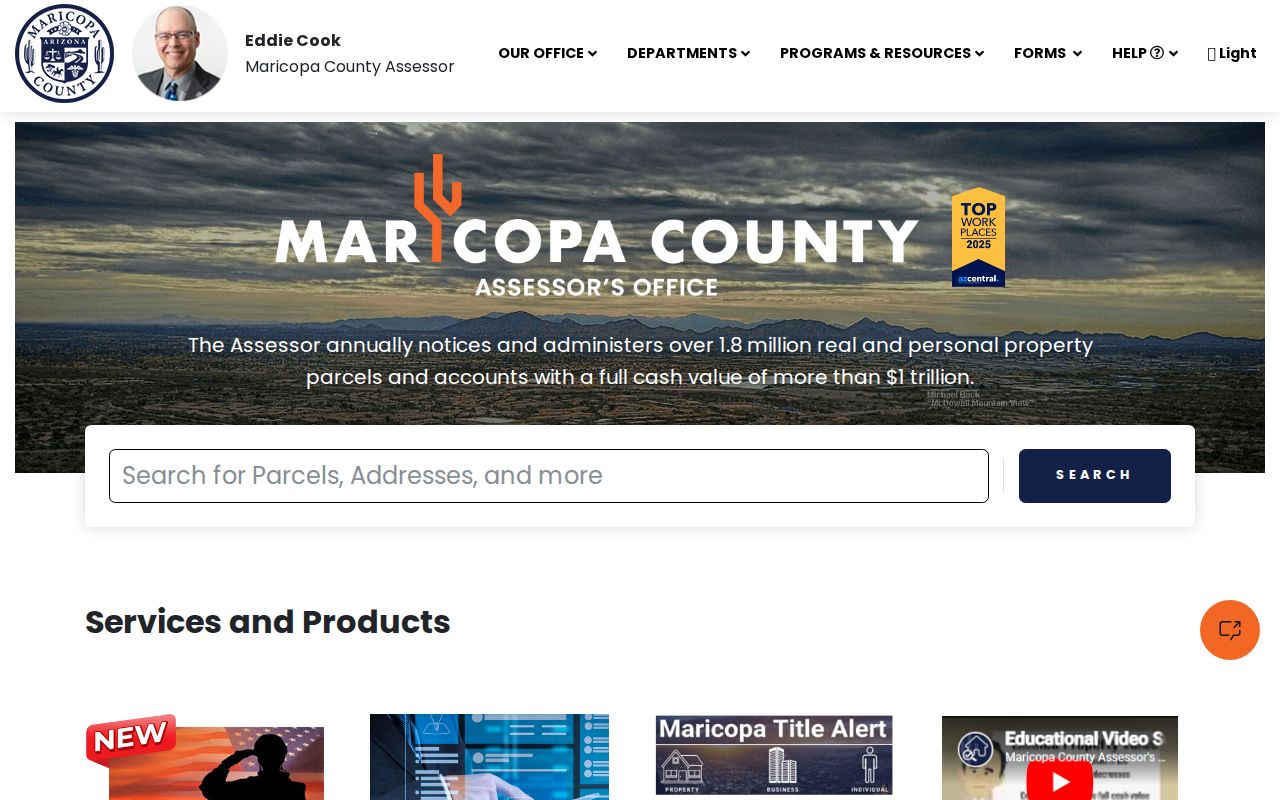
The image connects the lookup process to the county office that keeps the parcel roll, not to any commercial name compilation.
Custodians Behind Surprise Records
Surprise is not the county seat. The core deed, probate, marriage, assessment, and general court corpus sits with Maricopa County offices. It does not sit with the city. What stays local is municipal material. The City Clerk and individual departments hold council records, permits, code matters, police and fire requests, and City Court files. Statewide voter, vital, corrections, licensing, and business sources belong to Arizona agencies. Mailing one broad request to every office only slows things down. Match each question to the custodian that created the record in the first place.
Surprise City Clerk
16000 N. Civic Center Plaza
Surprise, AZ 85374
623-222-1000
Arizona Public Records Law, chiefly A.R.S. §§39-121 through 39-121.03, asks for prompt access rather than setting one universal deadline. A precise request names the department, a date range, an address, a case or permit number, the file type, and the preferred format. The Surprise street directory walks the full address chain without repeating the office map here.
Surprise Deed Records Span Eras
Maricopa County's recorded-document corpus reaches back to 1871. County figures reported in 2022 put it above 52 million searchable documents, with new names indexed at a pace of roughly 72 hours. That span starts more than six decades before Surprise's 1938 founding. Land tied to the future community may therefore show up under legal descriptions, subdivision names, book and page references, or a regional label rather than a modern street address.
The Recorder search accepts a recording number, docket or book and page, business name, personal last and first names, document code, date range, and Internet Map Locator references. A deed index entry may show the recording number and date, document type, grantors, grantees, page count, cross-references, and image status. Any image stays unofficial unless purchased and certified through the Recorder. When a chain goes cold, try spelling variants and swap the party roles.
- Grantor
- The party transferring an interest in real estate.
- Grantee
- The party receiving that recorded interest.
- Legal description
- The lot, block, subdivision, or survey wording that identifies land beyond a street label.
- Index
- A finding aid that points to a recorded instrument, not always the official certified copy.
Note: A free Recorder image suits casual research, but request an office-certified copy whenever formal proof is required.
Present-Day Surprise Directory Sources
No current official Surprise residents directory lists every household. Purpose-built rolls cover different groups instead. Pick the source that matches the fact you need to confirm, then read the role each person plays in it. Property ownership, voter registration, a court appearance, and a business filing are four distinct facts, not one identity.
| Official source | What a name can mean | Custodian | Public route |
|---|---|---|---|
| Property roll | Owner, trust, or entity tied to a parcel | Maricopa County Assessor | Free web search |
| Recorded documents | Party to a deed, lien, release, plat, or judgment | Maricopa County Recorder | Free index; copies priced separately |
| Voter information | A voter whose supplied identity details match | Arizona Secretary of State | Individual verification portal |
| Court indexes | Named party with a stated case role | City, county, state, or federal court | Index or clerk request |
| Entity filings | Agent, principal, manager, or business contact | Arizona Corporation Commission | eCorp entity index |
A focused Surprise resident lookup can stitch those rolls together when the target is a single person. A missing result proves nothing. Protected addresses, sealed cases, spelling changes, delayed updates, and databases built for self-verification all limit what an open search displays, so an empty return is not evidence that no record exists.
Voter Lookup Confirms, Not Browses
The Arizona Voter Information Portal works differently from a street roster. You supply a name or details, and it returns registration and polling information for that one voter. It does not let you browse. Wider access to the state voter file falls under A.R.S. §16-168, which sets permissible-use limits, excludes certain fields, and attaches fees and penalties. A.R.S. §16-153 adds protection for qualifying voter records.
For the Surprise residents directory, that contrast matters. The county Assessor lets you browse parcel owners by address or geography. The voter portal only verifies an identity you already hold. Treating the two as open lists would misstate both tools and could expose people the law shields.
The official voter portal shows the identity-checking entry point.
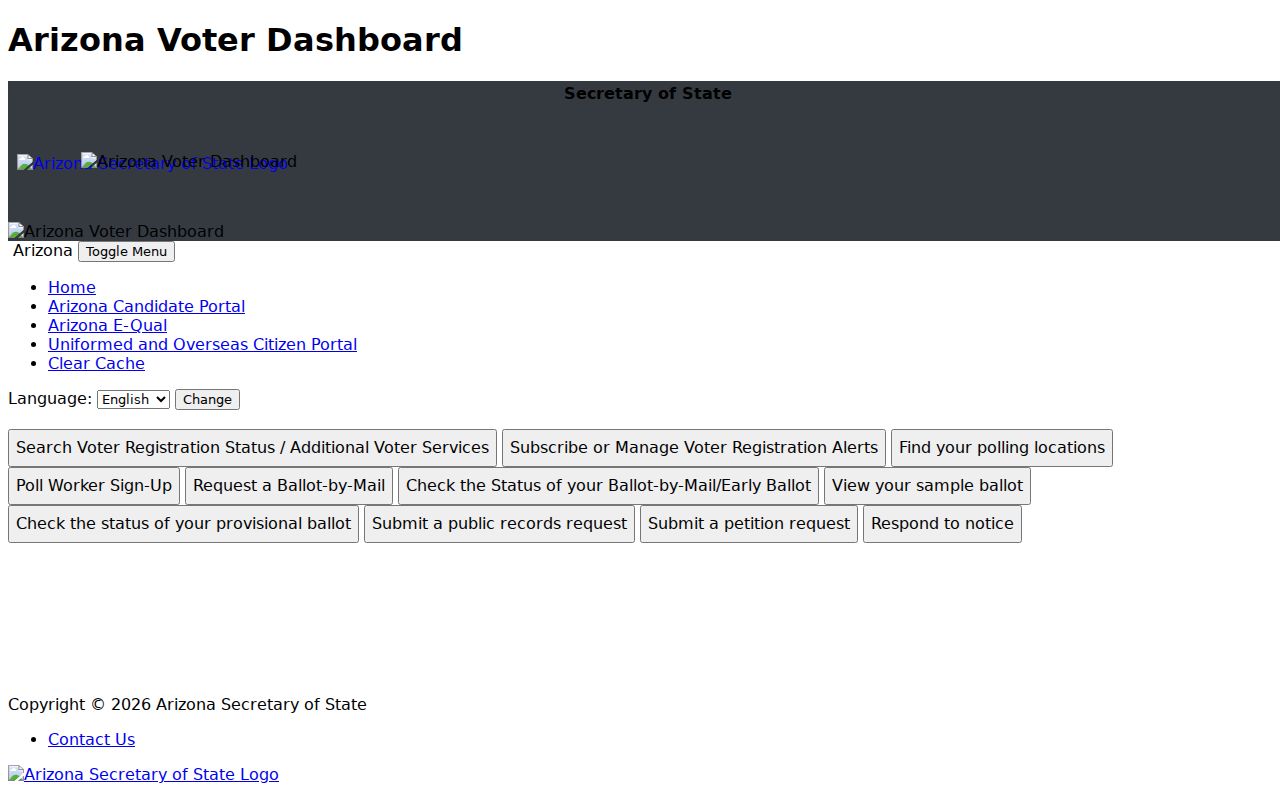
Voter records in Surprise work through personal verification, so a lookup returns one voter's own details. A resident lookup by ZIP code or block simply is not offered.
Use records lawfully. Search public information for genealogy, reconnection, estate work, consumer safety, and civic research. Never use it to stalk, harass, intimidate, or evade an address protection.
Surprise Court Records Need Context
Court files in Surprise sit across several systems. Surprise City Court takes city-code matters, criminal misdemeanors, and civil traffic cases. Maricopa County Justice Courts hear limited-jurisdiction cases. The Superior Court handles felonies, civil, probate, family, divorce, and other general-jurisdiction work. Federal cases belong to the U.S. District Court for the District of Arizona and PACER. One name can show up in several courts for unrelated reasons.
The Arizona Public Access portal searches participating courts by last name. An optional first name, date of birth, court or county, and case type can narrow it, or you can search by case number. It updates weekly, and it is informational rather than the official court record. Sealed cases and protection orders stay out of the index. So do mental-health material, probate information, victim or witness data, juvenile matters, and local-ordinance charges. So a no-result never rules out a file held by a clerk.
| Search field | Use | Limit |
|---|---|---|
| Last name | Required for the name path | Common names need more facts |
| First name | Narrows party matches | Variants and initials matter |
| Date of birth | Separates similar names when offered | Display may be partial or restricted |
| Court or county | Focuses the jurisdiction | Not all courts and cases participate |
| Case number | Direct route to a known index entry | Verify the file with its clerk |
Four Surprise Family Record Paths
Birth, death, marriage, and divorce records in Surprise have no single custodian. The Arizona Department of Health Services and the county registrar issue eligible birth and death certificates. Those records stay restricted under A.R.S. §§36-324 and 36-342. Under §36-351, the State Archives receives birth certificates after 75 years. Death certificates transfer after 50 years. That creates a separate historical route for genealogy work in the city directory.
Marriage licenses come from the Clerk of Superior Court in Maricopa County. The clerk at the Northwest Regional Court Center in Surprise handles licenses and other clerk business. Divorce is a Superior Court case. A decree must be requested from the Clerk subject to sealing and confidential-field rules. The published marriage license fee is $98. Certified-copy fees differ by order method, and they should be checked before payment. The Arizona vital-records hub lays out the eligibility and order routes.
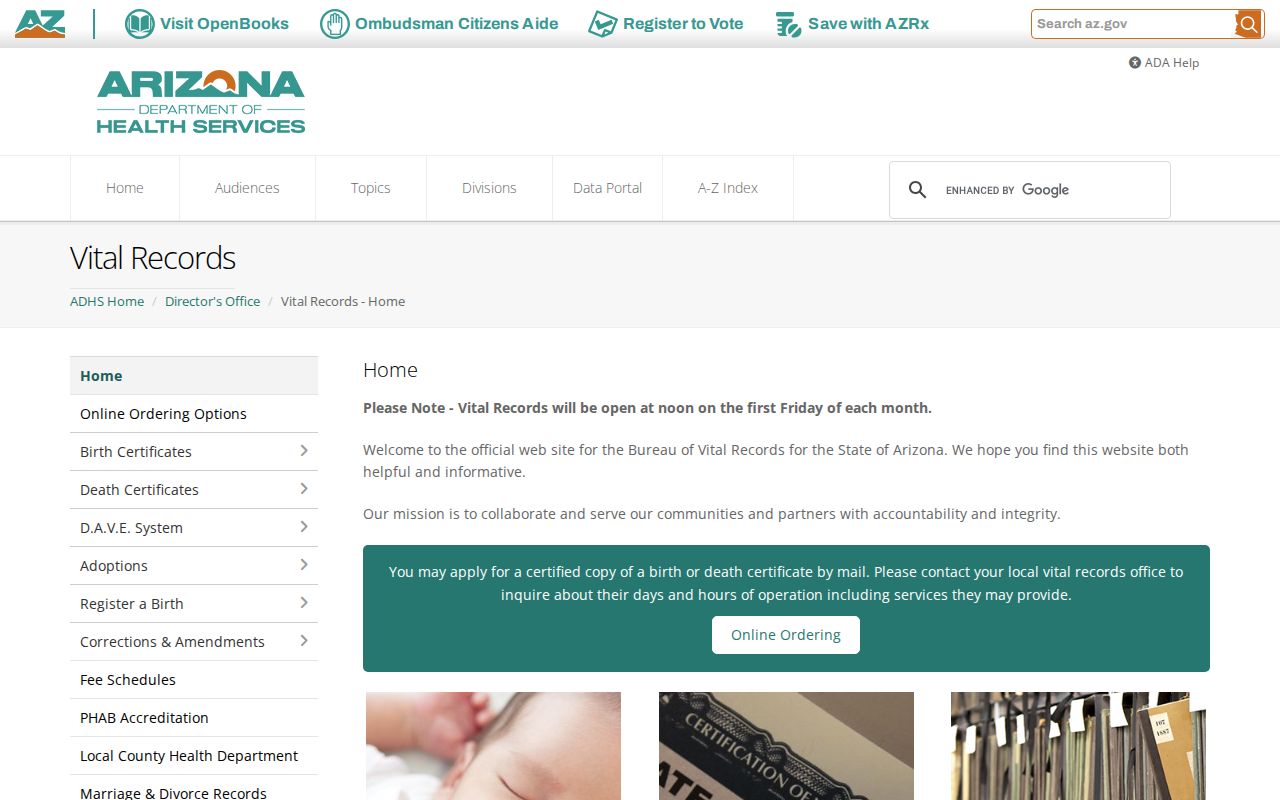
For current forms, identification rules, and fees, the hub is the right source. Historical open certificates follow the State Archives path instead, so older vital records for past residents of Surprise lead there.
Surprise City Records Use Departments
Surprise keeps its municipal records scattered across departments rather than behind a single counter. The Surprise public-record request page sends City Court, Fire-Medical, and Police requests down separate department paths. Similar requests follow those routes too. Development Services handles historical permits, applications, inspection logs, certificates of occupancy, and releasable plans. Code files need their own request. Planning, building safety, and enforcement systems may rely on different indexes. A combined ask can stall.
A strong property request names both the street address and the APN. It should state a date range. Separate the record types. Ask for native electronic files where available. Keep names tied to their role, whether owner contact, applicant, contractor, or designer. The record still does not prove residence. The official request routing screen displays the city's current department choices.
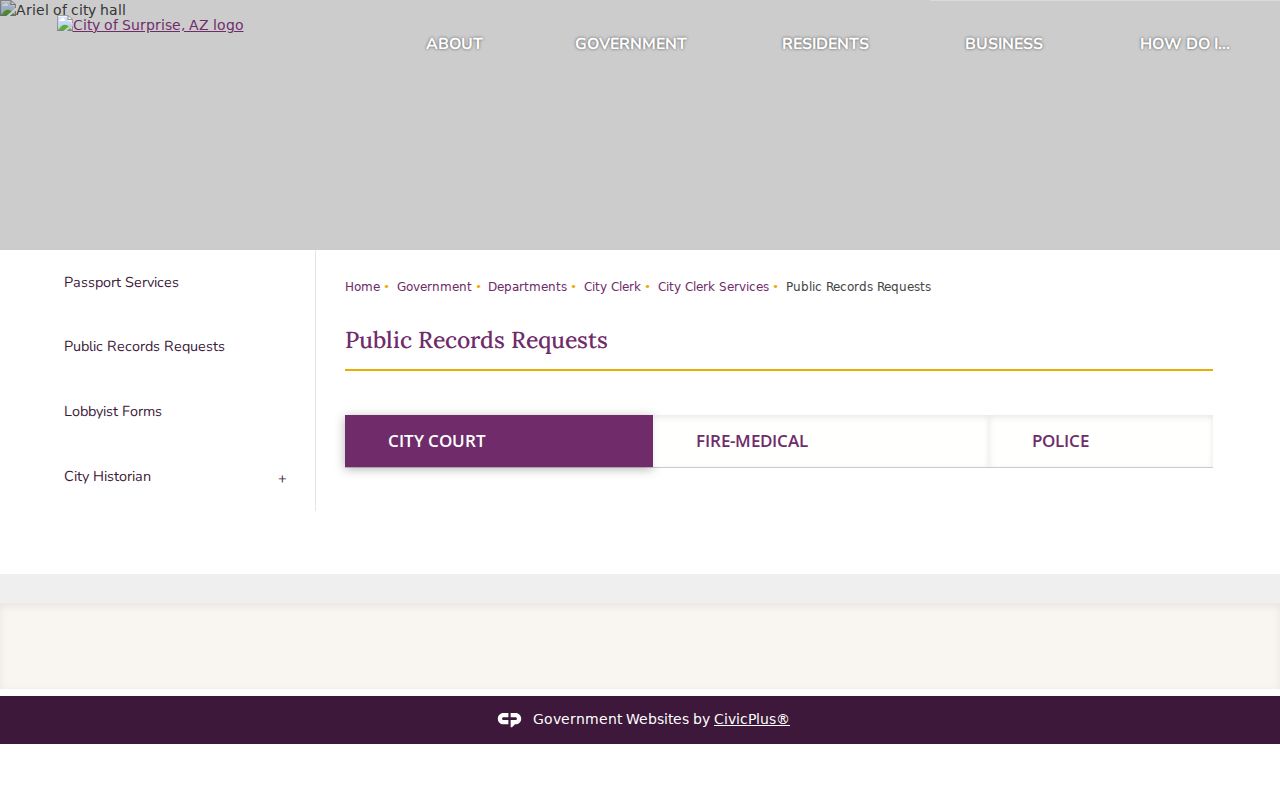
Routing a records request through the right department beats sending a vague demand to City Hall and hoping it finds the file.
Note: Arizona law expects prompt production, but archived, broad, or redaction-heavy requests can take longer than a narrow one.
Surprise Directory Books Go Regional
The Arizona Memory Project's City Directories collection spans 1881 through 1989. It holds nearly 400 digitized directories statewide. Place tagging confirms six volumes that include Surprise. These are Mullin-Kille Glendale ConSurvey books from 1957, 1959, 1961, and 1963, along with Cole's Greater Phoenix cross-reference volumes from 1962 and 1963. Those scans certainly cover the community. That does not rule out other print volumes elsewhere.
An alphabetic directory can list a name, spouse, occupation, employer, home address, telephone, and a home-ownership symbol. A criss-cross book works the other way, starting from street and house number. Search broad regional labels too, because early Surprise households often fall under Glendale, Greater Phoenix, or Salt River Valley coverage. One 1963 entry shows dual numbering for N Factory, so try both visible address forms rather than assuming a citywide renumbering date.
The Surprise city directory collection page holds the full shelf and its search method. Directory evidence carries more weight beside the 1930, 1940, or 1950 census, a deed, a vital record, or probate material.
Surprise Record Geography Changes Searches
Three layers of government touch one Surprise address, and they rarely agree. USPS decides the delivery name and ZIP code. Surprise itself governs only inside the city limits. Maricopa County holds the assessor rolls, deeds, and the main court systems. A single parcel can sit in Surprise jurisdiction. It may carry a postal name from a neighboring town. Its owner mailing address may sit somewhere else entirely. None of that is a mistake.
Borders and growth zones make this worse. The city's planning area stretches well past its incorporated footprint. The 2023-24 Community Profile put about 110 incorporated square miles inside a planning area above 300 square miles. Names such as Asante, Marley Park, Rancho Gabriela, Greer Ranch, Surprise Farms, Sierra Montana, Sterling Grove, City Center, Bell Road, Grand Avenue, Loop 303, Railplex, and North Surprise work fine as subdivision or map clues. They cannot replace an APN or a legal description.
Fresh northern and western addresses usually trace best through parcel, plat, and permit systems. Older Original Town Site and mid-century addresses may land in the regional books instead. That split is exactly why the Surprise residents directory needs more than a modern name box.
Verify Every Surprise Resident Match
Never accept a match on a name alone. Compare the full name, middle initial, age or date clues, address dates, relatives, and the role each record assigns. Two independent official sources beat one every time. Check a court index against its clerk. Read a deed image for vesting and the legal description. Treat a business filing as a company role rather than a home address. An unclaimed-property hit stays a lead until the claimant proves identity and ownership.
Send every correction to the source. The Assessor fixes parcel-roll errors. The Recorder handles indexed instruments and recorded corrections. A court clerk resolves docket or file issues under court rules, while the voter office handles registration. Pulling a result from a private publisher never erases the official record behind it. When a name has gone cold, an Arizona Unclaimed Property search can still add a locality clue.
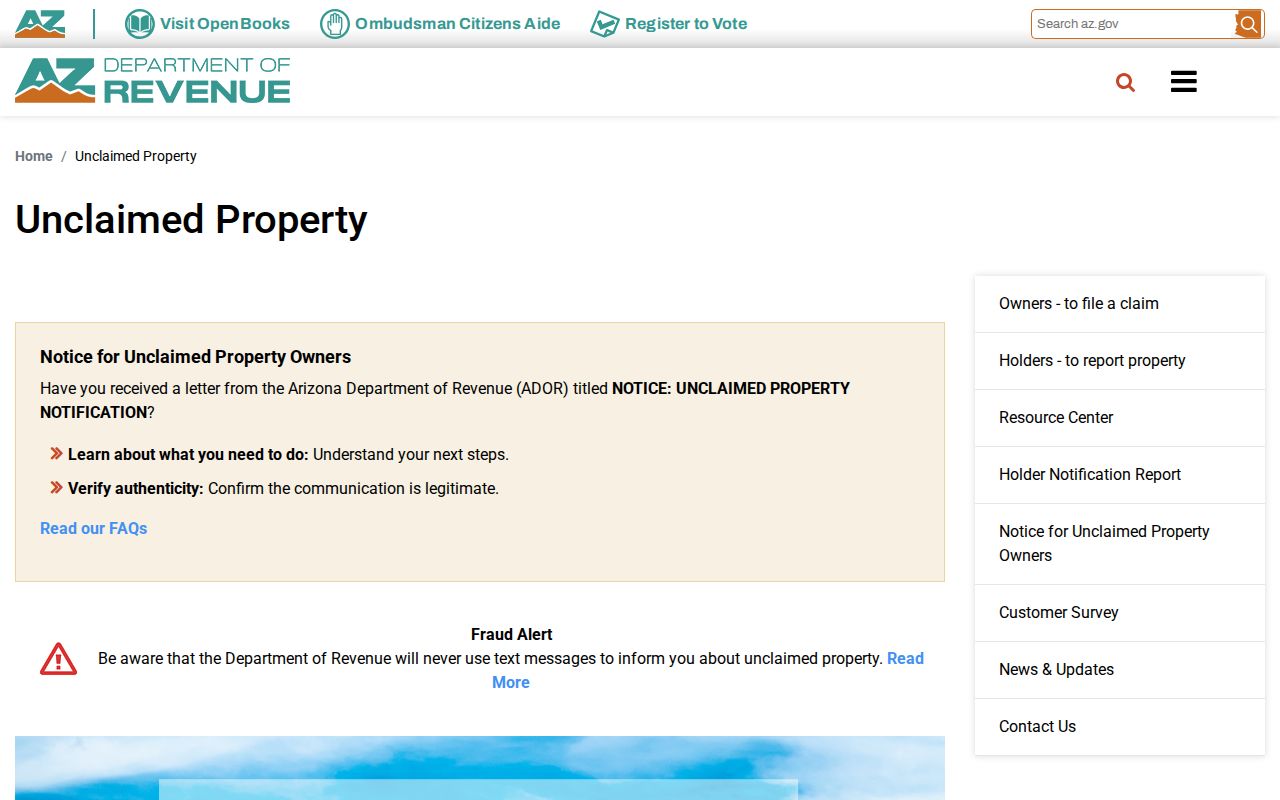
The official search is free. Still, a name and city match remains only a lead until the claimant proves identity and ownership.
Identity check. A shared name is not enough. Confirm role, place, time, and one other stable fact before linking a Surprise record to a person.
Public records shift over time. Protected addresses may be sealed, vital certificates can close, and some court categories never reach the public index. Responsible use keeps that uncertainty visible and claims only what the source supports.