
Surprise Address Sources Across Time
The best starting record depends on the period. For a current parcel, begin with the Assessor. For title, move through the Recorder. For a mid-century household, test the regional directories and released census schedules. Surprise began as a modern community in 1938 and incorporated in 1960, yet the county deed corpus is much older. Early land may therefore appear under a legal description or a broad regional title rather than a stand-alone Surprise label.
| Address-history source | Usable years | Surprise access point | Evidence supplied |
|---|---|---|---|
| Recorder index and deed books | 1871 to present corpus | Maricopa County Recorder | Ownership chain, instrument dates, legal description |
| Cole's Greater Phoenix criss-cross | Verified Surprise coverage in 1962 and 1963 | Arizona Memory Project | Published occupant and phone approached by address |
| Mullin-Kille Glendale ConSurvey | 1957, 1959, 1961, and 1963 | State Research Library and Arizona Memory Project | Names, residences, local labels, and other entry details |
| Federal census | 1930, 1940, and 1950 for the post-founding trail | National Archives and partner access | Household at the enumeration location |
| Assessor and Parcel Viewer | Current plus displayed sale or value history | Maricopa County Assessor | APN, current owner, situs, mailing address, structure clues |
| Permits and code records | Exact online start not verified | Surprise Development Services request | Work dates, applicant, contractor, and project details |
No verified Surprise-specific Sanborn fire-insurance sheet was found. Do not add one to an address timeline without checking the Library of Congress catalog for the exact locality and sheet.
Walk Maricopa Deeds Backward
The current parcel card provides the cleanest entrance to the previous residents trail because it supplies the APN, legal description, indexed owner, and often a deed reference. Open that purchase instrument in the Maricopa County Recorded Document Search. Record the seller, buyer, instrument date, recording date, and land description. Then reverse the prior seller's role to find an earlier purchase.
- Search the address in the Assessor and copy the APN, deed number, current owner, subdivision or MCR, and full legal description.
- Open the current deed. The owner receiving title is the grantee; the party transferring it is the grantor.
- Search that grantor as a grantee in an earlier date range. Confirm the same legal description before adding the instrument to the chain.
- Repeat one transfer at a time. Use book and page, recording number, or subdivision when a name search returns too much or too little.
- For an authoritative version, order the official copy. An online image is explicitly unofficial.
The Recorder's corpus dates to 1871, but that does not mean every old document is indexed by a modern street line or APN. Trusts, companies, HOAs, and subdivision names belong in the Business Name control. Plats use the subdivision name with the Plat Maps code. The Phoenix counter and mail Copy Desk remain useful when online retrieval fails.
- Grantor and grantee
- The grantor transfers an interest; the grantee receives it.
- Chain of title
- The linked sequence of recorded transfers for the same land.
- Legal description
- The recorded land identity, often based on a subdivision, lot, block, or survey rather than a postal line.
- Criss-cross directory
- A volume arranged by street and address, allowing a place-first search for a published occupant.
Match Surprise Addresses to Directories
Six digitized directories are verified through the Arizona Memory Project's Surprise place authority. Four Mullin-Kille Glendale ConSurvey books cover 1957, 1959, 1961, and 1963. Two Cole's Greater Phoenix volumes cover 1962 and 1963. These titles prove that the scans include Surprise. They do not establish every volume ever held or a complete annual run.
The 1957 regional directory provides an early checkpoint for previous residents tied to a name or address.
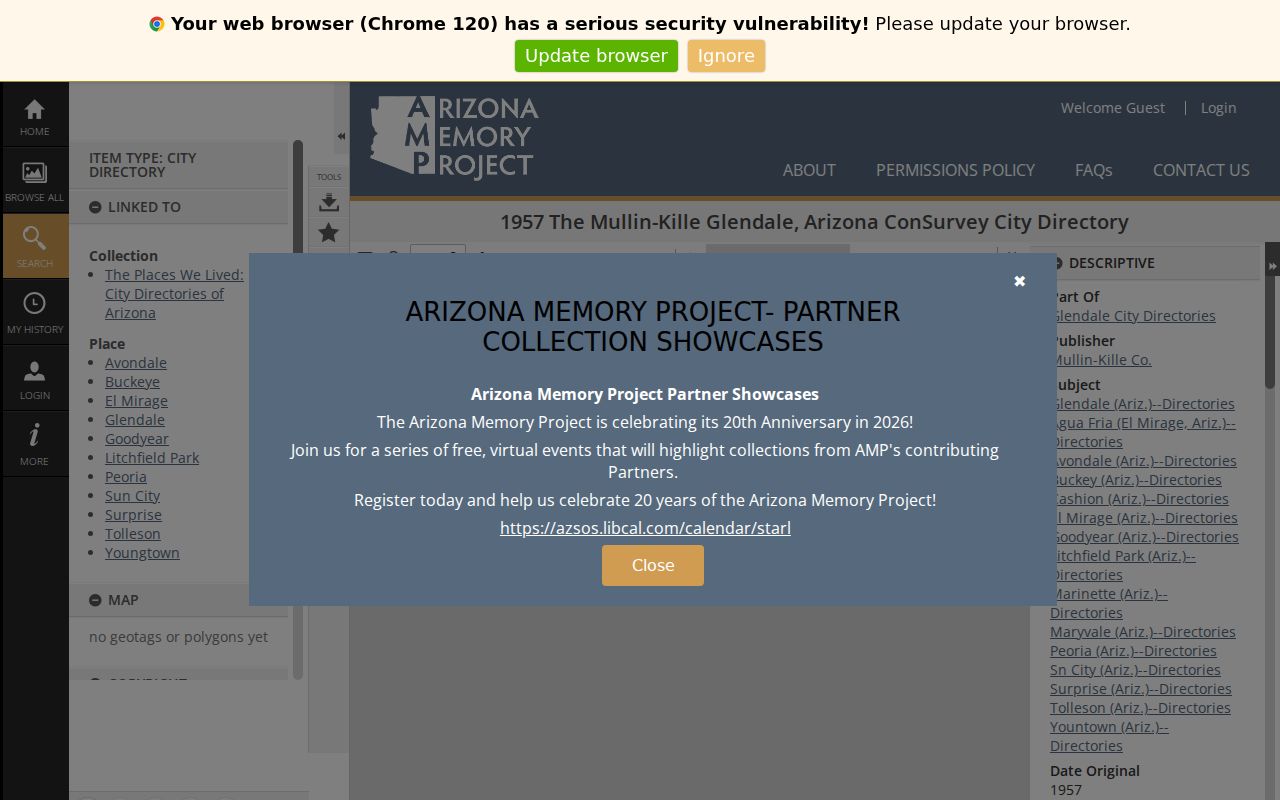
Preserve the exact printed locality and street form from the scan. Those details help reconcile the entry with the modern parcel.
The 1961 Mullin-Kille volume supplies the next verified alphabetic point before the reverse directory years.
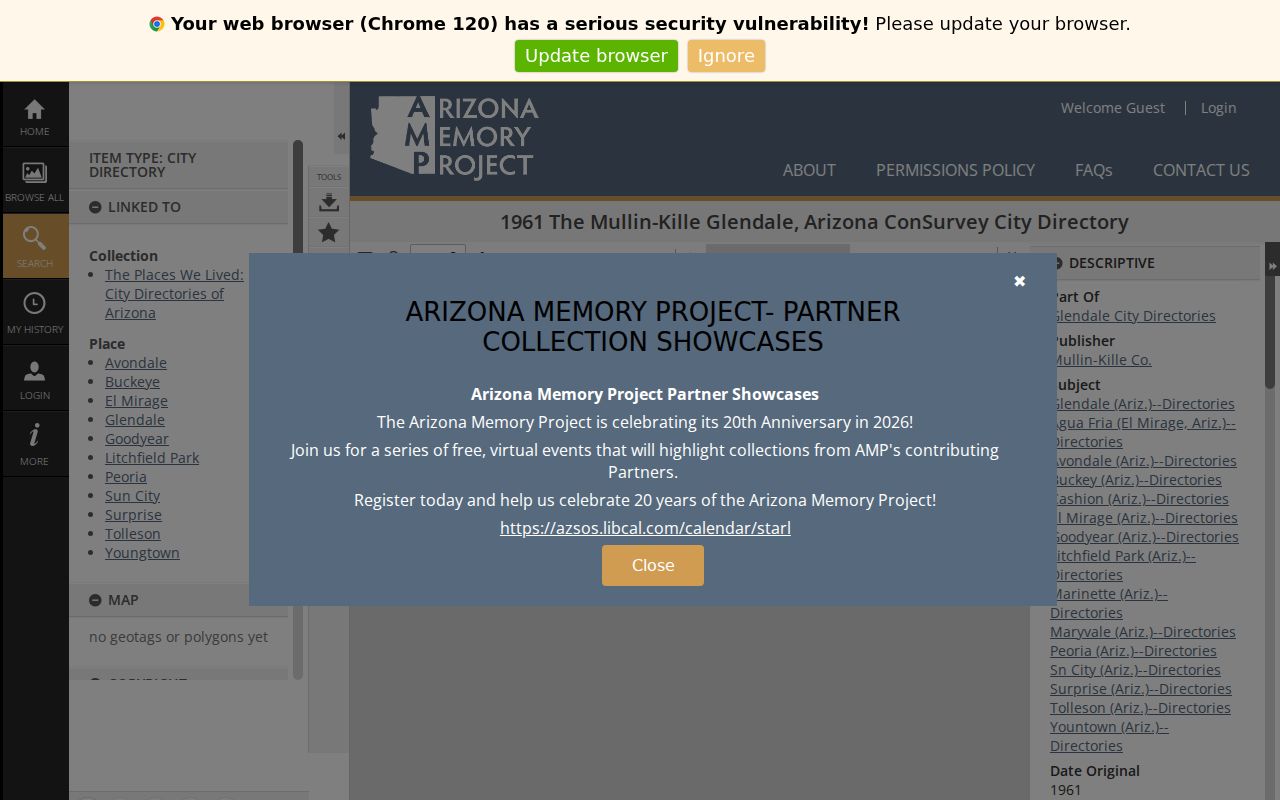
Compare name, spouse notation, address, and owner mark only after reading that volume's legend.
Keep Surprise Address Continuity
A 1963 Mullin-Kille entry offers a concrete warning: “15632 (225) N Factory” appears with Surprise as the locality. The parenthetical number may preserve an older address, but its exact meaning must be checked against the book's legend. It is safe to search both numbers. It is not safe to claim a citywide renumbering year without an ordinance or map.
Legal descriptions are the best defense against label drift. Copy the subdivision and MCR for a platted lot. For rural or unsubdivided land, retain section, township, and range. Compare historic plats and annexation boundaries if Surprise, Glendale, Sun City, Sun City West, or Wittmann labels appear around the same land.
The Surprise deed record also divides into two eras. The county corpus predates the community's 1938 origin by more than six decades. Sparse rural indexing may use a party name or land description, while later master-planned growth is far more visible through parcels, plats, permits, and HOA instruments.
Note: A changed address label does not break the land chain when the legal description still matches.
Pair Surprise Directories and Census
Owners are only half of an address history. A regional directory may name a person at the street line, and a released census can show the household in its enumeration setting. For post-founding Surprise, the available sequence begins with the 1930 census as pre-community context, then 1940 and 1950. Later schedules remain closed under the federal 72-year rule. The 1960 census is scheduled for release in 2032.
Use a measured pairing process:
- Search the surname in each applicable 1957, 1959, 1961, and 1963 alphabetic volume. Record the entry exactly.
- Enter through the address in the 1962 and 1963 Cole's volumes. Note the published occupant and phone, if shown.
- Place the directory findings around the nearest released census. Compare household members, place, and address clues.
- Use the deed and parcel chain to test whether a listed householder also held title. Do not assume that the two roles match.
- Mark each gap as unresolved. Omission, scope, changed spelling, death, or a move can all cause a blank year.
The full publishers, entry symbols, and collection tools are covered on the Surprise Directory Book page. For a backward address trail, the goal is narrower: place each published clue on the parcel's timeline.
The 1962 Cole's Greater Phoenix criss-cross directory demonstrates the address-first form used for that task.
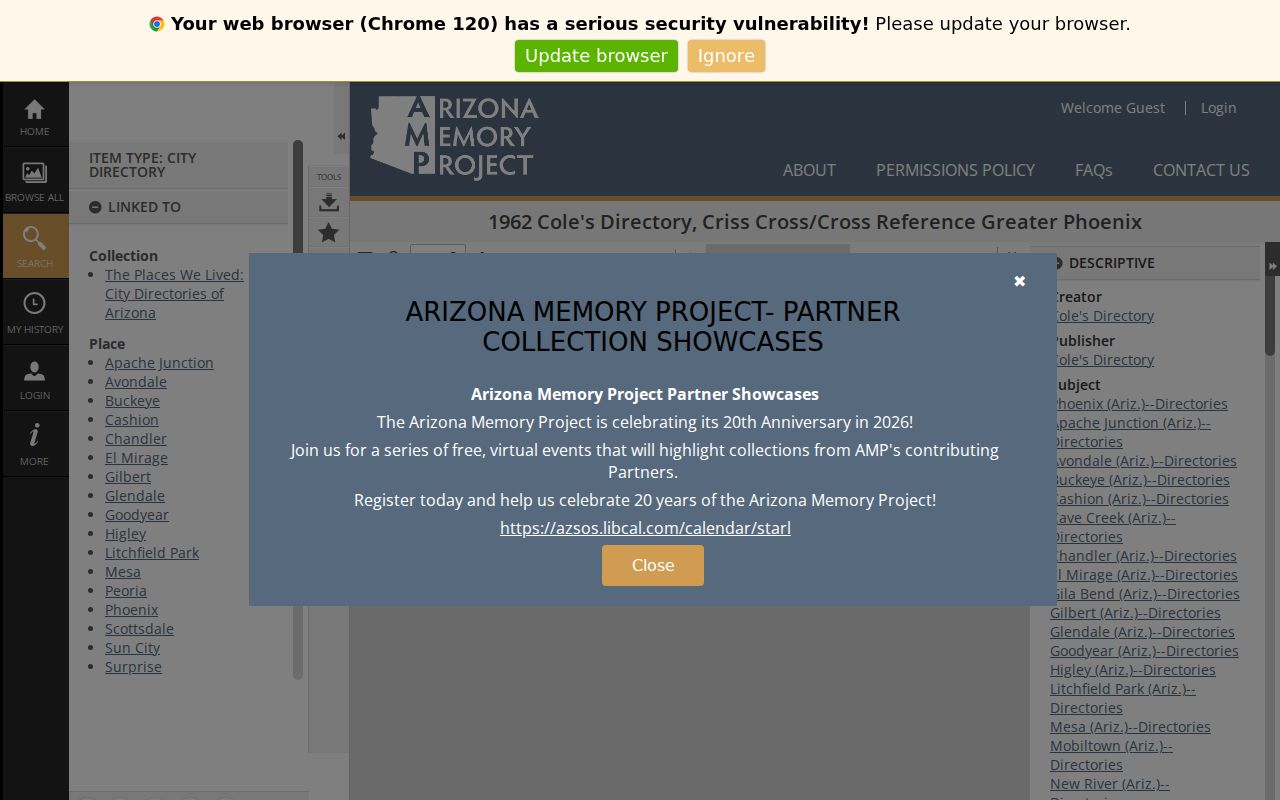
A reverse listing can support occupancy for its publication date, but it does not replace the deed chain.
Date Changes at a Surprise Address
Surprise Development Services can supply permits, applications, inspection logs, certificates of occupancy, releasable plans, zoning cases, and code files. A focused request includes the street address, APN, a date range, and each desired record series. Ask for code enforcement separately because planning, building-safety, and enforcement systems may not share one index.
A permit dates work, not residence. The named applicant may be an owner, contractor, designer, or project contact. Put the project and inspection dates beside the deed timeline, then use the directories or census to test who occupied the place. That separation is especially useful for older core parcels and for newer Surprise subdivisions where recorded plats and permit files are more complete than any historical directory.
The City Clerk at 16000 N. Civic Center Plaza routes public requests, but the department that created the file is the proper custodian. Arizona Public Records Law calls for prompt action, without one fixed universal deadline for every request. Archived or redaction-heavy files can take longer.
Connect Surprise Owners to Heirs
For a deceased owner, an obituary may supply relatives, dates, and a later place. Treat it as a lead. The stronger bridge is a Maricopa County probate file or a recorded beneficiary deed. The Clerk of the Superior Court holds probate matters even though the statewide public portal can omit probate and other protected categories. A no-result online is weaker than a direct clerk inquiry.
Surprise has a local Northwest Regional Court Center at 14264 W. Tierra Buena Lane. It handles limited public-record access and probate-related clerk business on weekdays. The main Clerk system and the Recorder remain separate custodians: court filings explain an estate proceeding, while recorded instruments show what entered the land record.
Family history works best from two directions. Start with the address and follow title backward. Start with the deceased person's name and follow obituary and probate links forward. Where both paths meet, previous residents can be placed with far more confidence than a lone name match allows.
Resolve Gaps in Surprise History
Some gaps are expected. A parcel split or combination can retire an APN; the Assessor accepts requests for parcel-history reports. An early deed may be found by book and page but not by a modern address. A directory may omit Surprise because the community appears inside a broader Glendale or Greater Phoenix volume. A protected or redacted record may show less than an older copy.
The National Archives census research guidance explains the released federal schedules and access framework.
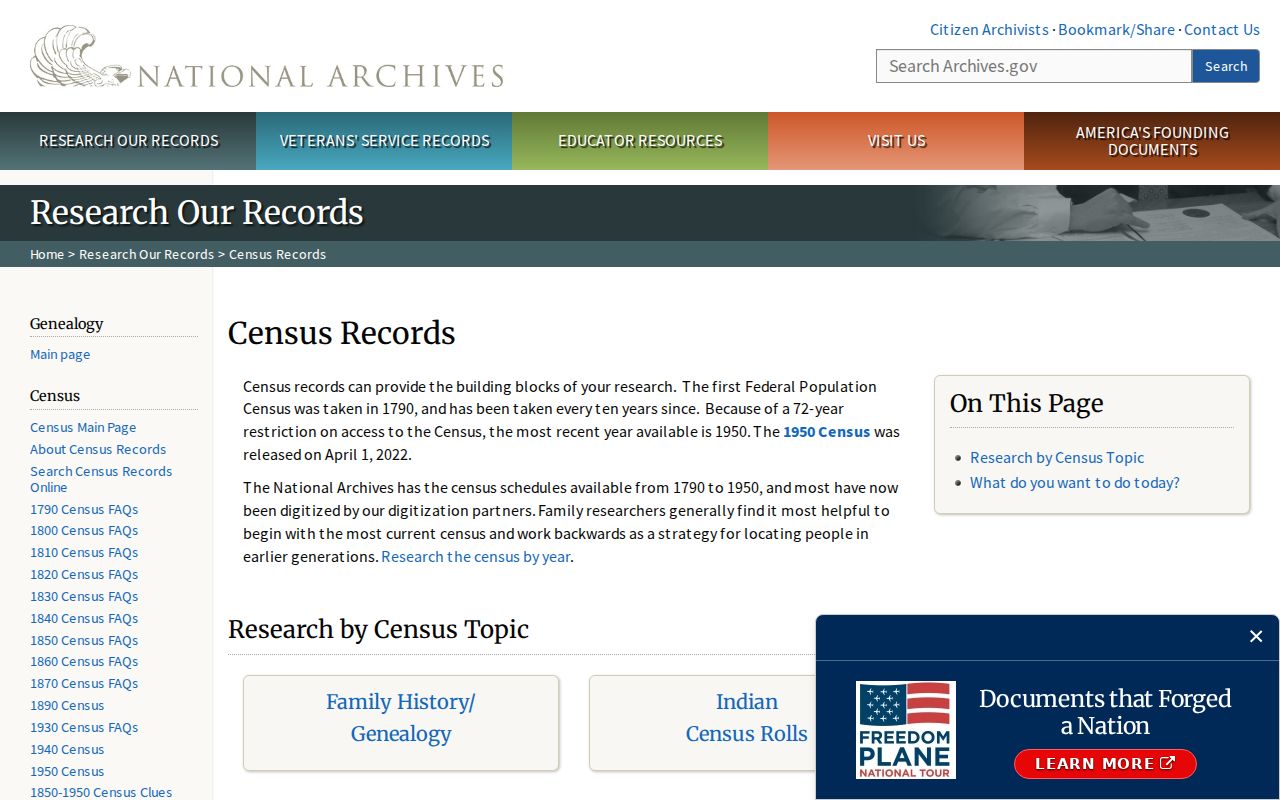
Census evidence should be paired with a directory year and the parcel identity, not read as a stand-alone address index.
No source proves absence by itself. Record a portal miss as “not located,” preserve every spelling and place variant, and ask the custodian about print, microfilm, mail, or counter access when the online path ends.
Lawful use. Research Surprise previous residents for family history, heir work, house history, or personal curiosity. Never use an address trail to harass, stalk, or harm a living person.
Close the trail with a source list. Note which office supplied each fact and whether the item was an index, an unofficial image, or an official copy.