
Surprise Neighbors Block Sources
The block around a Surprise address is visible through several layers, but none is a full household list. The Maricopa County Assessor Parcel Viewer shows parcel boundaries and indexed owner or address fields. An assessor parcel card adds the situs address, separate tax mailing destination, legal description, and property details. Recorded deeds establish transfers. Voter data has restricted purposes and protected fields. Public community contacts help identify an association without opening its private roster.
| Source | What It Shows About a Block | Access |
|---|---|---|
| Parcel Viewer | Lot boundaries, adjacency, indexed owner and address fields | Free map; click parcels one at a time |
| Assessor parcel cards | Owner, situs, tax mailing address, APN, legal description | Free; qualifying details may be suppressed |
| Recorder index | Transfers tied to parties and legal descriptions | Name and document search; not an occupant list |
| Voter file | Lawful registration and district fields | Restricted use and distribution; protected voters absent |
| HOA or community contacts | Public organization and management contacts | Published contacts; member rosters presumed private |
Owner does not mean occupant. A trust, LLC, seasonal owner, or out-of-state owner may appear on the parcel. Family members, renters, minors, and other occupants are not named by the assessment roll. The correct claim is narrow: the parcel map identifies the indexed owner of a particular lot as of the data checked. It does not establish every Surprise neighbor who lives there.
Map Surprise Neighbors by Parcel
The official adjacent-parcel method is direct map browsing. Begin with one verified address, then move only to lots that share a boundary or face the same short block segment. The viewer’s address locator zooms to a point. Click the polygon beneath that point to open parcel information. Then click each bordering polygon and record its APN before moving outward. This keeps a neighbor lookup focused on the immediate block rather than an entire ZIP or subdivision.
- Enter the street number and name in the Parcel Viewer. Direction, street type, and ZIP can help when suggestions are ambiguous.
- Click the subject parcel. Save its APN, physical address, owner label, subdivision, and MCR when shown.
- Click each parcel that borders it. Use APNs to open the related Assessor cards and keep a small source log.
- Compare physical and mailing fields. Label ownership clearly, and do not infer who occupies the home.
- Stop at the chosen block boundary. A full named-street search belongs in the Surprise Street Directory.
This flow is easy to audit: address to map point, map point to parcel, parcel to APN, APN to owner record. Subdivision or MCR searches add context, but adjacency is still best documented one polygon at a time.
Surprise Neighbor Map Limits
The Parcel Viewer offers APN, owner, subdivision name, subdivision number or MCR, section-township-range, ZIP, and Map ID searches. Address geocoding can also locate an intersection when the streets are joined with an ampersand or “AND,” with a street type on at least one street. Results appear in a tab, and selecting a result zooms to its feature information.
A key quirk matters for any Surprise neighbor search: the viewer selects no more than the first 1,000 features. A large subdivision or ZIP result can exceed that cap. It is a map navigation aid, not a complete roll. Narrow the work to the target block and click parcels manually. If a parcel has split or combined, preserve the legal description and ask the Assessor for a parcel-history report rather than treating a vanished APN as proof the land disappeared.
Note: Save each Surprise APN and legal description because viewer links, postal labels, and parcel numbers can change while the recorded land chain continues.
Geography Behind Surprise Neighbor Records
Surprise sits inside overlapping record geographies. Maricopa County maintains property, deed, and much court data. The City of Surprise manages municipal services and local records. USPS controls delivery labels. Those layers need not match. A parcel can fall within Surprise jurisdiction, carry a different preferred postal label, and list an owner mailing destination in a third place.
The parcel card’s situs address identifies the physical property. Its mailing address shows where the owner’s tax notice goes. A legal description, such as subdivision, lot, block, or MCR reference, identifies the land in recorded instruments. These fields answer separate questions. Matching situs and mailing addresses can be a clue, but it still does not prove every member of a household. A different mailing address can reflect a trust, seasonal owner, or simple mail preference.
Development names such as The Grand, Marley Park, Sierra Montana, Rancho Gabriela, Surprise Farms, Asante, and Sterling Grove can help with subdivision and community-contact searches. They are not fixed substitutes for ZIPs or city limits. In border and older areas, nearby Sun City or Sun City West labels can also appear in postal or historical material.
Surprise Neighborhood Contact Directory
The City maintains a public route for HOA and community contacts. That resource helps a Surprise neighbor find an association, manager, or civic contact without assuming that private member data is open. Research confirmed master-planned communities and associations including The Grand, Marley Park, Sierra Montana, and Rancho Gabriela. No official source established a public resident-member directory for them, so membership lists should be treated as private unless the group affirmatively publishes one.
The Surprise HOA and community contacts resource is the proper starting point for current organization details.
The captured page supports an organization-first approach: contact the public representative for community matters rather than seeking a household roster.
Master-Planned Communities
Search the city contact resource by association or community name. Confirm the current public manager or board contact there.
City Neighborhood Services
Use city community resources for connection programs and public civic contacts. Do not request private member information.
Local Archives
Yearbooks, newspapers, churches, veterans groups, and local history collections may document past community life, subject to access rules.
Surprise Neighbors and Voter Data
The Arizona voter portal is built for individual verification. It is not a public by-street search for Surprise neighbors. A.R.S. §16-168 governs voter-file access, permitted uses, exclusions, fees, and distribution. The full file may contain registration and district fields for approved use, but ordinary public disclosure withholds sensitive identifiers. Internet redistribution is restricted, and statutory misuse can carry serious penalties.
The official Arizona voter-data statute shows why a block roster cannot be reconstructed from the public self-service tool.
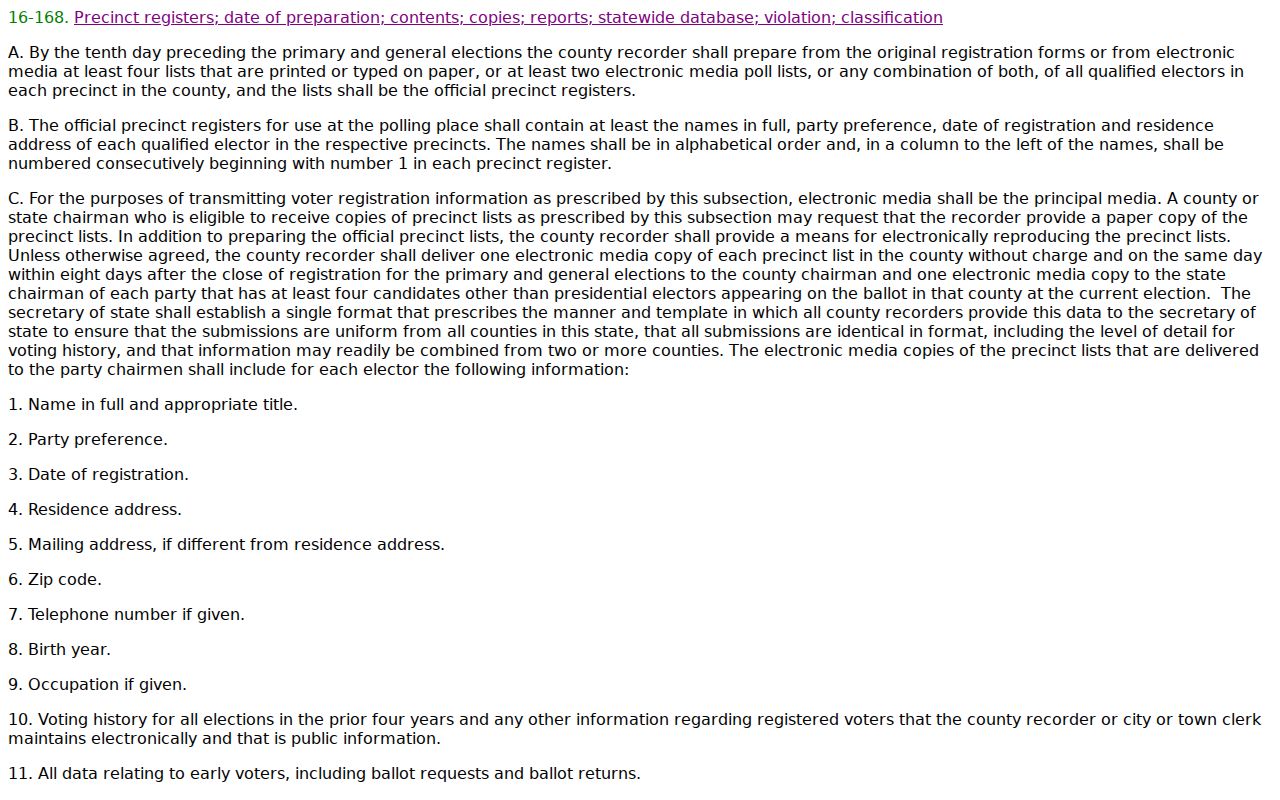
The statute sets the access boundary. It does not turn the voter file into a casual neighbor directory. Voter history means participation, never ballot choices.
Protected registration has another layer. The protected voter-record statute allows qualifying information to be sealed.
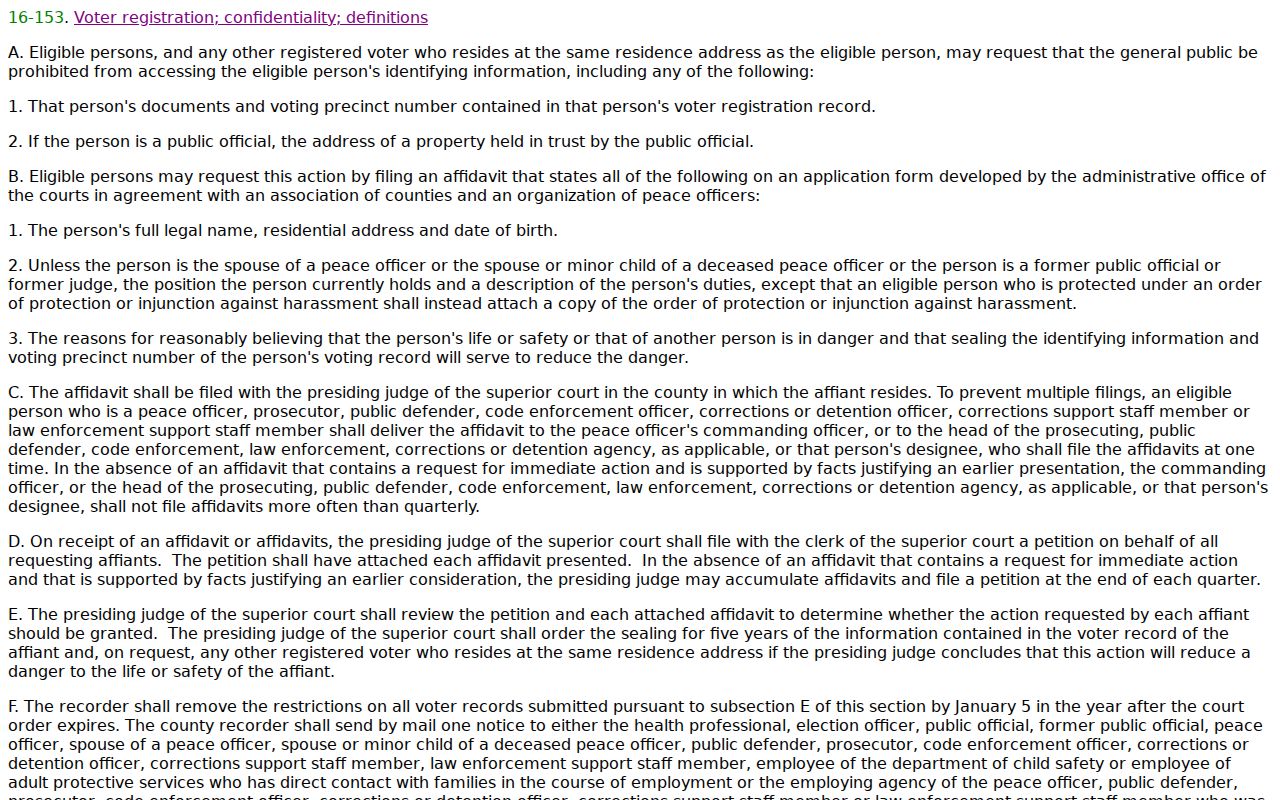
That protection can cover eligible officials, safety personnel, people with protection orders, Address Confidentiality Program participants, and in some cases other voters at the same protected residence.
Compare Surprise Neighbor Sources
Official records and commercial neighbor tools are not equal sources. County and city systems define the field, custodian, and update process. Commercial compilations blend public and nonpublic feeds, may lag, and can merge people with similar names. They can be treated only as leads. A source should be chosen for the fact it is authorized to keep.
| Source Type | Best Use | Main Limit |
|---|---|---|
| Assessor and Parcel Viewer | Map lots and confirm indexed parcel ownership | Does not list all occupants |
| Recorder | Confirm title transfers and legal descriptions | Party and land index, not a block household list |
| City community contacts | Find a public HOA or civic contact | Membership rosters are generally private |
| Commercial compilation | Possible clue for later verification | May be stale, blended, or wrongly matched |
For a current Surprise block, begin with the parcel viewer and confirm the selected cards. For a title question, use the Recorder. For a community question, contact the organization through its public channel. This division prevents a weak clue from being restated as a fact about a neighbor.
Surprise Neighborhood History Clues
Surprise has two broad records eras. The community dates to 1938 and incorporated in 1960. Older blocks may appear through rural legal descriptions or regional Glendale and Greater Phoenix directories. Newer north and west development is more likely to leave a modern parcel, plat, HOA, and permit trail. That split explains why the same neighbor method will not work for every era.
The Surprise City Historian supplies official local context for neighborhood and community research.
The historical route adds context without turning archives into a current roster. Community groups, churches, veterans posts, and yearbooks may preserve past names, but present-day membership should still be presumed private.
A mid-century block may also require the 1962 or 1963 Cole’s Greater Phoenix criss-cross volumes that include Surprise. Those directories begin with an address and point to the listed occupant or phone at publication time. They are historical snapshots. Pair them with deeds or census evidence rather than carrying an old listing forward as a current claim.
Note: A historic Surprise directory entry identifies the listed person at publication time, not the owner or every member of the household.
Privacy Limits for Surprise Neighbors
Public parcel data leaves important gaps by design. Renters, family members, minors, congregation members, utility customers, delivery accounts, and private association rosters sit outside the parcel map. Arizona’s Address Confidentiality Program provides eligible survivors a substitute mailing address and forwarding. A.R.S. §11-483 also provides a court process for restricting certain property-related identifying information for eligible people. Suppression does not erase official records, but it blocks general public display.
A missing name should be reported only as “not located.” It may reflect a trust owner, a new transfer, a protected record, delayed indexing, or a person who is not the titled owner. Do not approach a neighbor as though a map result proves who lives inside a home. Direct, respectful contact and public community channels remain the sound paths for ordinary civic questions.
Lawful use. Surprise neighbor records support block awareness, reconnection, property curiosity, and civic participation. Never use them to watch, harass, threaten, intimidate, or harm another person.